

Journaling often appears to be simple, but things get complicated when you give it a try. Many individuals, particularly those who aren't fond of writing, find a blank paper extremely daunting to the extent that it hardly provides any assistance. If you have been thinking about how to start journaling for beginners, you won't be the only one, as most people even delay at the point when they must start.
In fact, journaling is really not about being good at writing. It is simply a method to get ideas from your mind and to express them on paper that is not capable of judging you. No rules, no stress, no need to come up with deep thoughts all the time.
If starting has been hard for you, it is not like you are a wrong person, but the truth is, you were never given a method that really corresponds to how ordinary people think. We will solve this problem together!
Why You Keep Overthinking Something That’s Supposed to Be Simple
Overthinking is the main reason people can't start journaling. You decide to write, open your journal, and then your mind seems to totally forget how to think.
Often, this is perfectionism disguised, the thought that only something big, elaborate, or worthy can be written. Then, once you've been exposed to "aesthetic journals" on the internet, it becomes almost impossible to write something.
However, a journal is not necessarily perfect or clever, and the pressure to do so is completely optional; you simply don't have to hold on to it.
Simple Steps to Start Journaling When You’re Not a “Writing Person”
Let’s break down journaling for beginners step by step so it feels easy:
Step 1: Understand Your Reason for Journaling
Before you get down to writing, first figure out what really motivates you to start journaling. Is it your daily life documentation, habit tracking, gratitude expression, or creative freeing? Getting to know your reason will lead your journaling path and keep you going regularly.
For instance:
- Self-Reflection: Writing in a journal might be useful for releasing and understanding your emotions and experiences.
- Goal Setting: Keep a list of your goals in your journal and record each step you take towards them.
- Creative Writing: Try writing poems, short stories, or sketches
- Brain Dumping: Writing all of your thoughts down on paper can help clear your mind
- Step 2: Choose a Journal You’ll Actually Use
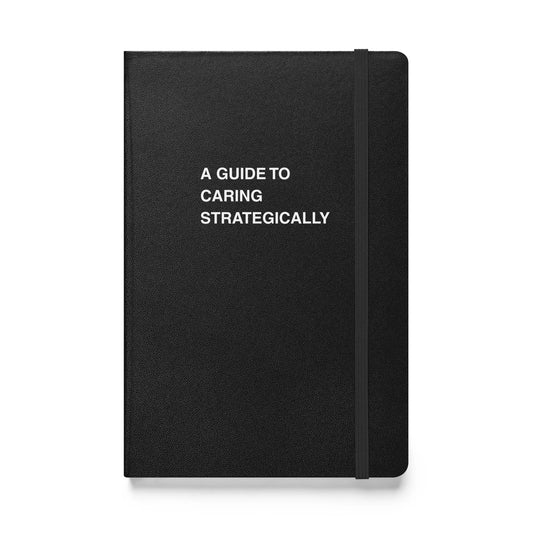
Choosing the right journal can make initiating a task a lot more doable and nicer. One excellent option would be the journal from Unimpressed Press, a brand that caters to those who seek simplicity, utility, and a bit of extra thoughtfulness in the standard notebook.
Every notebook is designed to be used effortlessly day in and day out. It has 80 cream-colored lined pages within a lovely UltraHyde hardcover binding, along with an elastic closure, ribbon bookmark, and pocket slot for unorganized notes which you can "get around to sorting out later.
The size, 5.5" × 8.5", is very practical and easy to carry around, so it's great for everyday journaling without being bulky.
It's quite simple: just open the document, start typing, and let your thoughts flow freely while you write.
Step 3: Choose Your Writing Tools
The journal is important. On the other hand, the same is true for the pen or pencil you choose to write with. Select pens, pencils, or markers that are not only comfortable for you. But also reflect your handwriting style. Try out various colors and styles to make your journal entries more attractive.
Step 4: Start Small
Initially, one of the biggest hurdles in journaling is the perfectionism that people apply to their entries, both the content and length. Take small steps with easy and short targets:
- Describe your day in a few sentences.
- Write down three things you are thankful for.
- Draw a picture that shows how you feel.
The main secret is to keep writing even for a few minutes only. After a while, this routine will be second nature to you and very easy.
Step 5: Explore Different Styles
Not sure how to start a journal for the first time or what to try first? Give different journaling styles a go and see what suits you best.
- Daily Journaling: Document your day's activities, musings, and emotions in writing.
- Gratitude Journaling: Mention everyday things you feel grateful for.
- Bullet Journaling: Use the dotted journal format to record your habits, organize your tasks, or set your goals.
- Creative Journaling: Either sketch or doodle. You can write poems and stories as well.
- Reflective Journaling: Write on these stimulating questions or share your main life lessons.
Step 6: Make Journaling a Comfortable Habit
Dedicate one fixed time daily for journaling. It may be a morning journaling session to schedule your day or evening journaling session to look back; regularity is the key. Pair your journaling time with a relaxing activity such as drinking a cup of tea or listening to soft music. Hence making it a practice you will look forward to.
Step 7: Stop Trying to Be Perfect
Many people wrongly think that journaling means writing perfect entries. Still, journaling is more like your hidden refuge where you can be completely honest and vulnerable with yourself. Feel absolutely free to jot down your chaotic thoughts, mistakes, and flaws as it is the entire process.
Step 8: Rely on Prompts When You’re Stuck
If you’re wondering how to start journaling when you don’t know what to write, just a little prompt might be all you require to get going. Some suggestions:
- What things made you smile today?
- What goals do you want to set for yourself this week?
- Share a place that you would like to visit and explain why.
- What's a recent lesson you have learned?
Step 9: Reflect and Look Back
Doing a journal is in fact thinking and reflecting. You can look back at your old journal entries as a method of monitoring your personal growth, recognizing patterns of thoughts, and giving yourself credit for the things you have done. It is an excellent source of incentive and a new point of view that may occur to you at any time.
How to Journal Without Falling Into Perfectionism Again
Once journaling becomes your habit, perfectionism sometimes sneaks in. Instead of simply writing, you start thinking about how your entries sound. The simplest method to prevent this is to keep telling yourself that journaling is not a way of doing things perfectly, but a way of being truthful.
Don't try to produce good writing or even perfect thoughts. There will be some days when it gets messy. That's okay. You just want to keep producing, not impress.
If you get to a dead-end, you may want to reduce your stress a little by writing less, writing faster, or writing whatever pops into your head. The calmer you get, the greater the chances are that you will keep writing without even thinking about it.
Still Waiting for the “Perfect” Start?
Journaling doesn't have to be perfect, neat, or even make sense from day one. Most beginners struggle not because they can't. But simply because they put too much thought into how it should look.
The truth is, your entries at first will probably be quite messy, and that's completely okay if you feel that is what you need. The journal is about unburdening yourself mentally, not creating an impressive piece.
That's what Unimpressed Press is all about, a brand that produces journals for those people who want to live without perfectionism and positivity at all costs. Simple, honest, and a little unapologetic; that's how your thoughts ought to be, after all.
So, don't wait for the "right way". Get started on your present moment!
Frequently Asked Questions
What to write in your first journal entry?
You are welcome to write anything. Your thoughts, complaints, random ideas, or just the fact that you don't know what to write could be the first entry.
Should I write every day in the same notebook?
Only if you feel like it. Simply missing the day will not affect the notebook. Skip a few pages; even start halfway through; use five separate notebooks. The journal police do not exist.
Why does journaling feel awkward at the beginning?
This is not your usual way of thinking: laying out stuff on paper, typing, etc. At first, it will feel so strange. But later you won't even remember that you were trying to do it the "right" way.
Do you need a special notebook to start journaling?
No, a special notebook is not necessary for getting started with journaling. You can use any notebook; the act of writing regularly is of greater importance than the content of your writing.


